
Recycling That Fits the Way Your Business Works
A recycling program has to make sense for the people using it.
If a container is too far from the point where scrap is generated, someone has to move material farther than necessary. If pickups do not match the pace of an operation, space can disappear quickly. If several materials end up together, separating them later can create extra work and affect their value.
Those details are easy to overlook when everyone is focused on production.
Shapiro looks at the practical side of material handling. Where does material come from? How does it move through the facility? What happens before it gets picked up? Those answers give our team a better understanding of what the recycling program needs to accomplish.
Getting More From the Materials You Already Have
There may be more value in a facility's material streams than it first appears.
Metal scrap is a good example. Copper, brass, aluminum, stainless steel, and other non-ferrous materials have different characteristics and markets. Mixing everything together can make recovery more difficult. Keeping streams separated can make a meaningful difference.
Shapiro has been working with industrial commodities since 1904. That experience covers much more than identifying a piece of scrap metal. It gives our teams a better understanding of what materials are worth, how they should be handled, and where they can go after leaving the facility.
Our material expertise includes:
Steel and ferrous metals
Copper
Brass and bronze
Aluminum
Stainless steel
Nickel alloys
Titanium
Cardboard
Wood
Plastics
Industrial fluids and coolants
End-of-life equipment

When a Growing Operation Outgrows Its Old Process
A recycling setup can work perfectly well for years and then become inconvenient.
Production changes, equipment gets moved, a company adds another process and material volumes increase. What once worked without much thought may start creating bottlenecks or unnecessary handling.
Nixa's continued business development makes this an especially relevant consideration for companies operating in the community. The city identifies manufacturing and processing among its light industrial uses and continues to promote business and economic development.
Shapiro can work with businesses as those needs change. Sometimes the answer is as practical as changing collection points or pickup frequency. In other cases, a new material stream needs to be evaluated or an existing process needs a more thorough review.
More Than the Scrap Bin
Metal is central to Shapiro's business, but industrial recycling does not stop there.
Manufacturing and commercial operations also generate cardboard, wood, plastics, fluids, and other materials. Those streams can end up competing for the same space or being handled separately without much coordination.
Looking at the material picture as a whole can reveal a better way to manage it.
Shapiro works with customers to identify the materials being generated and determine how they can be collected and recovered. That may reduce the amount going through ordinary disposal channels while creating additional value from materials that already exist within the operation.
Projects That Need More Than a Regular Pickup
Some jobs are predictable. Others show up because the business is changing.
Equipment may need to be cleared before an installation. A facility project can produce a large volume of material over a short period. A customer may need product destruction or have a material stream that does not fit an established recycling routine.
Those jobs need coordination.
We have experience with project-based recycling work that requires planning around timing, material types, transportation, and the customer's schedule. The team can work through the details with the customer rather than leaving the business to figure out each step on its own.
Information You Can Actually Use
Knowing how much material is being recycled is useful. Knowing what it is, what it is worth, and how the program is performing is much more useful.
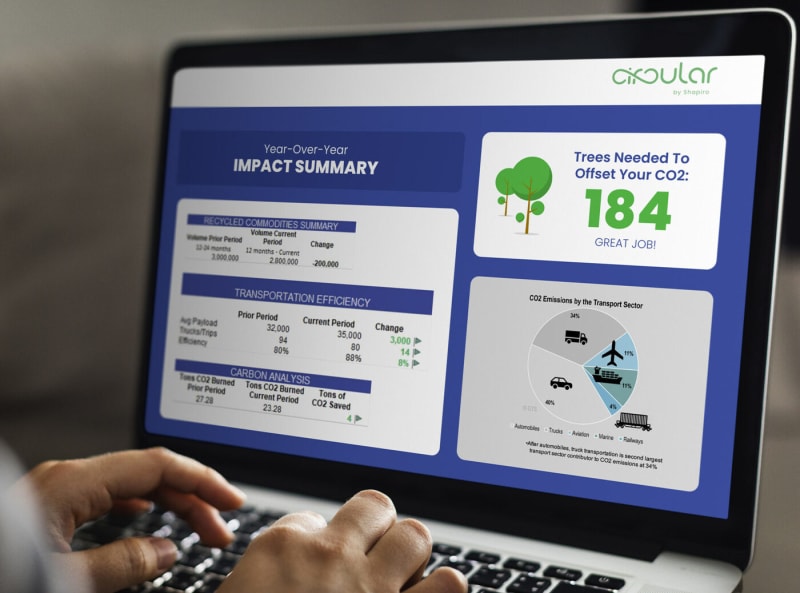
Shapiro's Sustainability Dashboard gives customers visibility into shipments, material weights, values, and transaction history. Operations and sustainability teams can use that information to see what is moving through the program and identify changes worth making.
For companies with multiple material streams, having this information in one place can make conversations about recycling much more concrete.
Serving Nixa Through Shapiro's Springfield Facility
Nixa businesses are served by Shapiro's Springfield, Missouri facility at 2330 West Catalpa. The location provides a nearby resource for companies in Nixa and surrounding southwest Missouri communities.
We bring together more than a century of commodity knowledge with a service approach built around communication and problem-solving. For a business in Nixa, that means having a recycling partner close to home with the resources to handle more than a standard scrap pickup.
Contact Shapiro Metals online or call our facility in Springfield, Missouri at: 314‑381‑9300

Want to know more?
Frequently Asked Questions
Can Shapiro review a recycling program that is already in place?
Yes. A company does not need to start from scratch. We can look at the existing setup, material streams, collection process, and service requirements to identify practical changes.
Can Shapiro handle a project that is separate from regular production scrap?
We work on project-based recycling needs involving equipment, facility changes, product destruction, and other material challenges that require additional planning.
How can a business know whether it is recovering enough value from its scrap?
Start by looking at what materials are being generated, how they are separated, and where they go after collection. Shapiro's commodity expertise and recycling data can give businesses a clearer picture of the value moving through their material streams.
Which Shapiro facility serves Nixa, Missouri?
Nixa is served by Shapiro's Springfield, Missouri facility at 2330 West Catalpa. Nixa is approximately 13 miles from Springfield by road.